
Student Support and Wellbeing
The York School recognizes social and emotional wellbeing as a foundation for effective learning and is committed to helping all students achieve success. We support students to develop essential learning skills and strategies that nurture and maintain their wellbeing. It is important to acknowledge that learning support for all students begins in our inclusive classrooms where teachers differentiate their instruction, assignments and assessments to meet the needs of a variety of learning styles. However, some students will need more support than this. TYS has a Multi-Tiered System of Support (MTSS), which is a framework that helps identify students’ academic, behavioural and social-emotional strengths and challenges, and provides differentiated support based on a student’s needs.

Middle and Senior School Wellbeing Team
Back Row: Vicky Diano - Student Support Assistant, Sarah Thornton - Learning Strategist, Elissa Kline-Beber - Associate Head, Wellbeing.
Front Row: Avalon Leopold - Social Worker, Shana Brandes - Nurse, Becca Kellner - Social Worker and Chris Corley - Learning Strategist.
Absent: Katie Maziarski - Middle school learning strategist and Khadijah Rhemtulla - Learning Strategist.
Multi-Tiered System of Support (MTSS)
MTSS focuses on the whole child. Students' academic, behavioural and social-emotional needs are identified through the use of universal screeners and diagnostic assessments, progress monitoring and response to intervention. MTSS provides learning and psycho-social interventions for students identified as needing the appropriate tiered level support.
Our support model provides three tiers of intervention.
TIER 1 is classroom support provided primarily by the teacher(s). This level of support is guided by the principle of Universal Design for Learning (UDL). UDL is an educational framework that reduces barriers in instruction, proactively provides appropriate accommodations and supports, and allows for high achievement expectations for all students, regardless of their unique strengths and challenges. UDL is based on research in cognitive neuroscience that guides the development of flexible learning environments that can accommodate learner variability by providing options and choices for students to personalize their learning.
TIER 2 provides collaborative support from the teacher and a member of the Student Support Team (SST). This is moderate support. Tier 2 supports occur in addition to the supports that are provided in tier 1 settings. These supports can be provided on an individual, small group or in-class basis.
TIER 3 provides more intensive support. These are often explicit, focused interventions that occur individually or in very small groups.

Type of Support
Decisions about the type of support a student requires are made by the Student Support Team (SST) with consideration of the frequency, intensity and duration of the support a student needs to meet curriculum expectations. The SST meets weekly to review student data. For students requiring more intensive, frequent or sustained support, more information may be required to understand the student’s learning profile and needs. In these cases, the SST will recommend to the parent that a psycho-educational assessment, a physical assessment or a mental health assessment be conducted in order for the school to appropriately plan a program of support.
Note: Students with Student Learning Plans (SLPs) may fall into any tier of this model based on the frequency, intensity and duration of support required to meet their learning needs.
TIER 1
Typically, a student who is struggling to learn is first identified by a teacher. As well, a parent or the student themselves may bring forward a learning or wellness (physical or mental health) concern. Tier 1 support may include, but is not limited to, the following:
Building a relationship with a struggling student to heighten their willingness to identify their challenges and access increased support from the teacher
Differentiating instruction, assignments and assessments to match a variety of learning styles, including those of the student of concern
Providing breaks to refocus, such as deep breathing, a body scan, a mindful moment or a physical activity
Conferencing with the student to discuss an assignment so that the teacher can clarify instructions and the student can share plans on how to accomplish the work
Re-teaching parts of a lesson through extra help sessions
Checking in frequently with a student to monitor progress and chunking classroom work and homework
Providing graphic organizers or checklists for assignments.
TIER 2
If the student is still struggling despite teacher support, a member of the SST will be consulted to determine next steps. They may trial Tier 2 support which provides moderate frequency, intensity and duration of support. Tier 2 support may include, but is not limited to, the following:
Regularly scheduled individual or small group extra help sessions with the teacher
Weekly agenda check-ins with a Learning Strategist to plan the work the student must accomplish that week
In-class support from the Learning Strategist to support differentiation within the classroom
Experimentation with instructional, environmental and/or assessment accommodations
Weekly conferencing with the teacher to review and discuss work in progress
Speech therapy and/or occupational therapy, as indicated. Note that a student receiving this type of support does not require a Student Learning Plan
Individual or small group counselling from the Counsellor or Social Worker
A referral for external counselling/therapy
TIER 3
Tier 3 support is the highest level of support The York School can provide. In addition to the interventions described above, it may include but is not limited to the following:
Intensive individual or small group support
A Student Learning Plan (SLP)
A Return to Learn Plan
A Safety Plan
A Behavioural Plan
A referral for external support (i.e. counselling, direct instruction, OG literacy support)
Provision of Student Support
Referrals for student support can come from teachers, parents, or students themselves.
Parents of students who have been absent from school due to an injury (including concussion – see Concussion Policy) or long-term illness should contact the homeroom teacher, advisor, and/or nurse. With medical documentation indicating that the student has been in medical care and any accommodations the school should consider, the Nurse will consult with the parents, the student, the Learning Strategies Teacher, and the classroom teachers to create a Return to Learn Plan. The plan will consist of essential work that must be completed and will be updated and shared with the student’s teachers and coaches on a weekly basis until the student returns to school full-time and is caught up with the outstanding schoolwork. A member of the SST will monitor and update the plan in consultation with the student.
Students requiring social-emotional support can access this through a variety of mechanisms including classroom interventions, small group or individual work.
Leigh Family Centre for Wellbeing
“I use the Wellbeing Centre almost every day. During my spares and often after school. It’s quiet, open, and modern, which makes it a great place to focus. At the same time, you feel supported with teachers and staff nearby. It’s really a wonderful space to work.”
- Anthony, Grade 12 Student

Middle School Learning Commons
For those students requiring mental health intervention, the Social Worker will conduct an assessment and develop a treatment plan in conjunction with the student. These plans may include:
a short-term therapeutic intervention plan,
a Return to Learn Plan. These are academic catch-up plans created for students who have been absent from school for an extended period of time due to physical illness or injury (including concussions) or mental illness. Where possible, the student should be cleared by a medical professional as “fit to return to school” along with recommendations for school accommodations, should they be needed. The plan is created and monitored by a member of the SST in collaboration with the Learning Strategies Teacher, the student and the classroom teacher(s), with the knowledge that the student may need considerable time to get caught up. Teachers will determine what work can be forgiven and what work must be completed so the student can successfully complete the year. The catch-up plan will be updated weekly and shared with teachers by a member of the Student Support Team.
a Safety Plan. These are designed by the Associate Head - Wellbeing in collaboration with the Head of School or divisional Principal, the Social Worker, the student and their parents when there has been a safety or medical concern, typically upon return to school after hospitalization. The student’s family will be asked for written consent for the Social Worker to contact and collaborate with the outside medical professional(s) treating the student. Where possible, the plan identifies triggers and warning signs, what the student should be noticing regarding his/her/their mental health, and a trusted adult(s) in the school with whom the student agrees to share any concerns. The plan is put in writing, signed by the student and parents, and then shared with the “trusted adult(s)”. The student will be closely monitored by a member of the Wellness Team.
a Behaviour Plan and/or a referral to an outside professional.
The parent will be consulted as appropriate given the age and willingness of the student. Written consent is obtained from the student (if age 12 or older) or the parent of younger students.
With written consent, the identified team member will assume the role of primary liaison with external supports with the objective of creating aligned plans of interventions including academic support and accommodations.
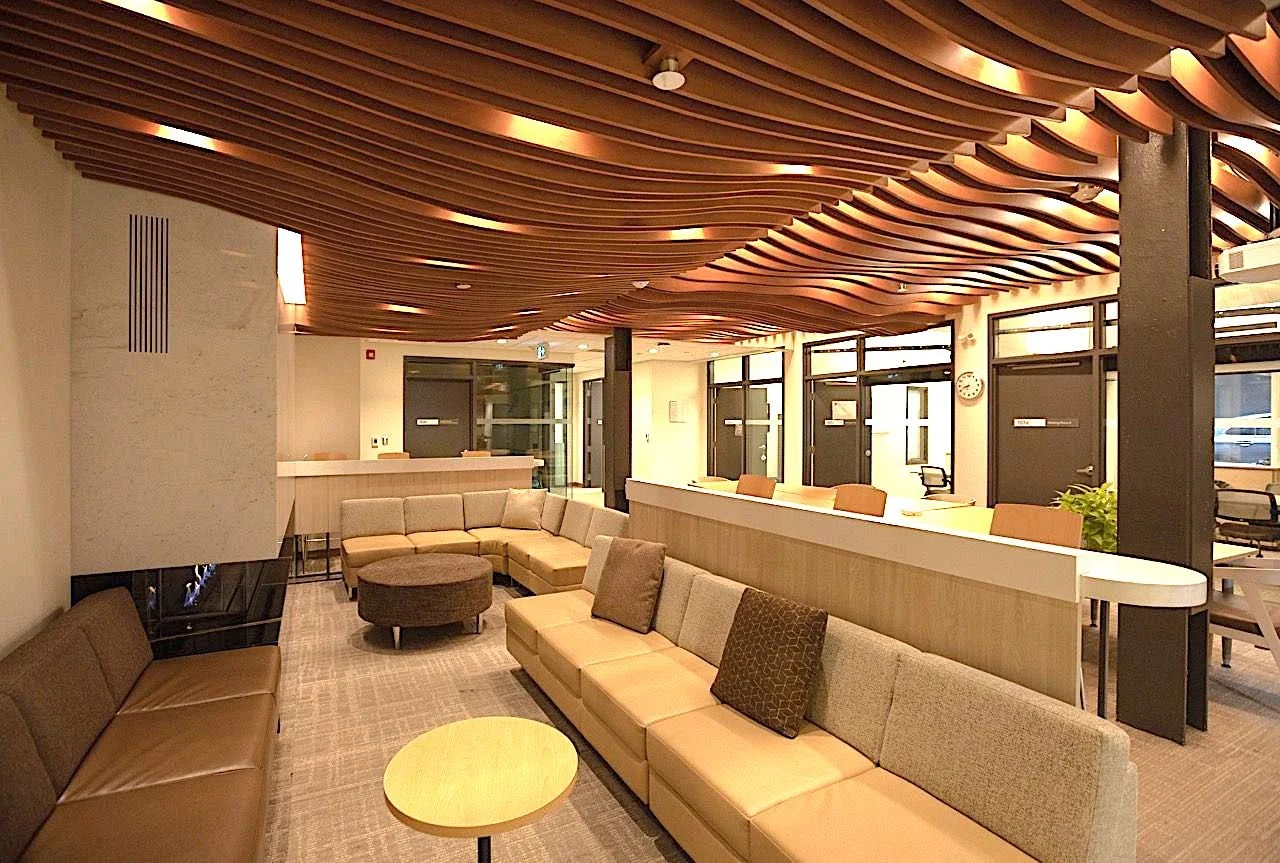
Leigh Family Centre for Wellbeing
The Leigh Family Centre for Wellbeing was opened in 2021. This space was intentionally designed to foster collaboration, access to the Student Support team, and nurture student wellbeing.